Where the body’s
language gets
passed on.
Structured live hybrid programmes for artists, students and professionals. Not one-off programmes, but sustained arcs of creation that are discussed and tested before being shown.
Stress reveals structure
Expanding the possible
IJAD creates live spaces for discovery. Where movement, technology and human imagination come together to explore new possibilities.
Artists, researchers, creative technologists and audiences all bring different forms of knowledge, experience and intelligence into a shared experiment. Through interaction, curiosity and collective exploration, we discover new ways of perceiving, creating and connecting. Expanding not only what we make, but how we think, and what we imagine is possible.
We introduce conditions that require a response; such as uncertainty, real-time interaction, shifting information, technological behaviours, physical limits, and the presence of others.
Who adapts? Who decides? Who’s seen, and who is not? Where does knowledge sit? And who carries responsibility when a system changes or fails?
IJAD provides a structure through which these conditions can be investigated. The aim is not difficulty for the sake of it, but to develop the ability to remain attentive when things get complex. To recognise what’s happening, understand one’s position within in, and discover when and how to intervene.
Pressure becomes a way of seeing. Participation becomes a way of knowing. Practice becomes a way of changing the system.
What’s learned doesn’t remain inside the experiment. Participants carry these ways of seeing, questioning and responding into their own practices, technologies, organisations and communities.
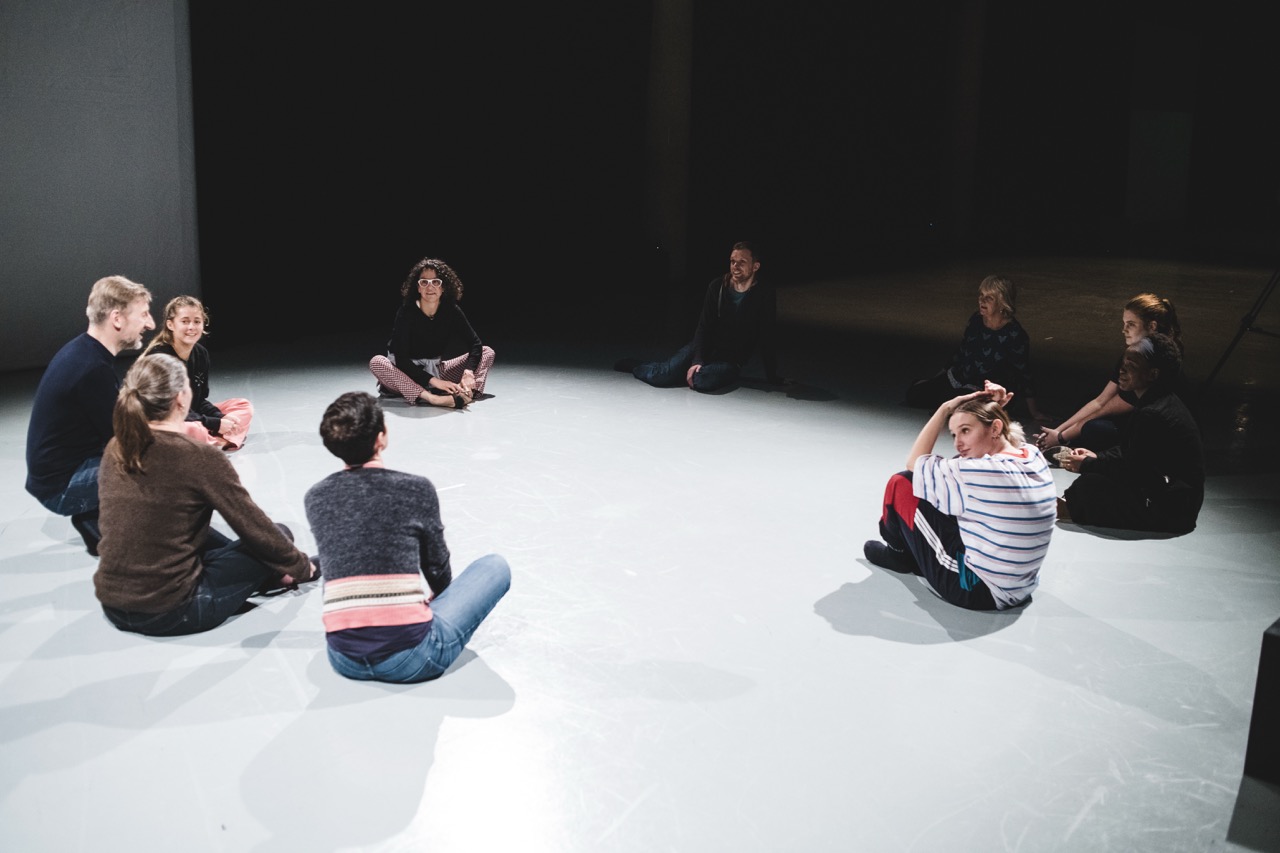
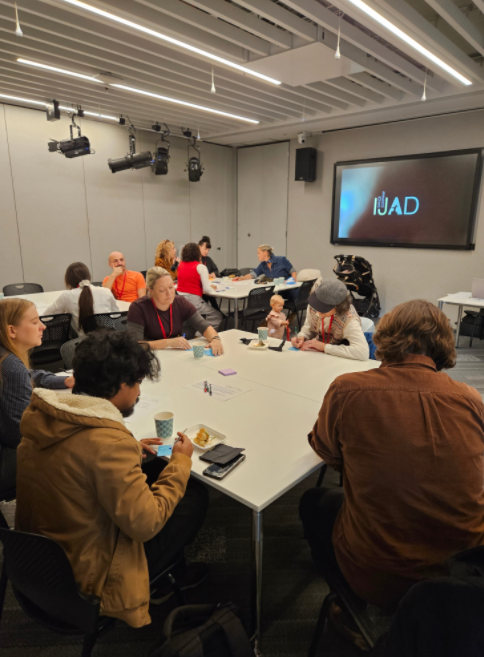
Learn our Sensography & Polyphonic strategies
Going beyond the theory found on our research pages, our curriculum teaches Sensography and Polyphonic strategies. We cover the same methodologies used in our own commissions, so what you learn here is what we practice.
Sensography Training
For artists & companies
Understand how perceptual and spatial design for hybrid work. How to keep a performance coherent and emotionally alive, whether someone is in the room, or watching elsewhere.
Polyphonic Strategies Workshops
For teams & organisations
Learn how to ensure performer, technology and audience operate as equal voices in a shared composition. With applications beyond dance, to any team building scenario.
Connective Matrix
Connective Matrix is IJAD’s online forum series of roundtable and panel discussions, bringing together leading researchers, artists, scientists and technologists from around the world to explore the future of performing arts.
Every eight weeks, we bring together some of the most prominent and forward-thinking voices working across performance, technology, science and multiple realities — people at the cutting edge of what’s possible. Together we examine the innovations, challenges and opportunities shaping new and hybrid artistic forms.
Connective Matrix is both an event series and a living community. Each online conversation adds a new strand to an evolving global network of thinkers and makers who share a commitment to pushing the boundaries of what performance can be, and who it can reach.
This is where the conversations that matter to the future of the arts take place.
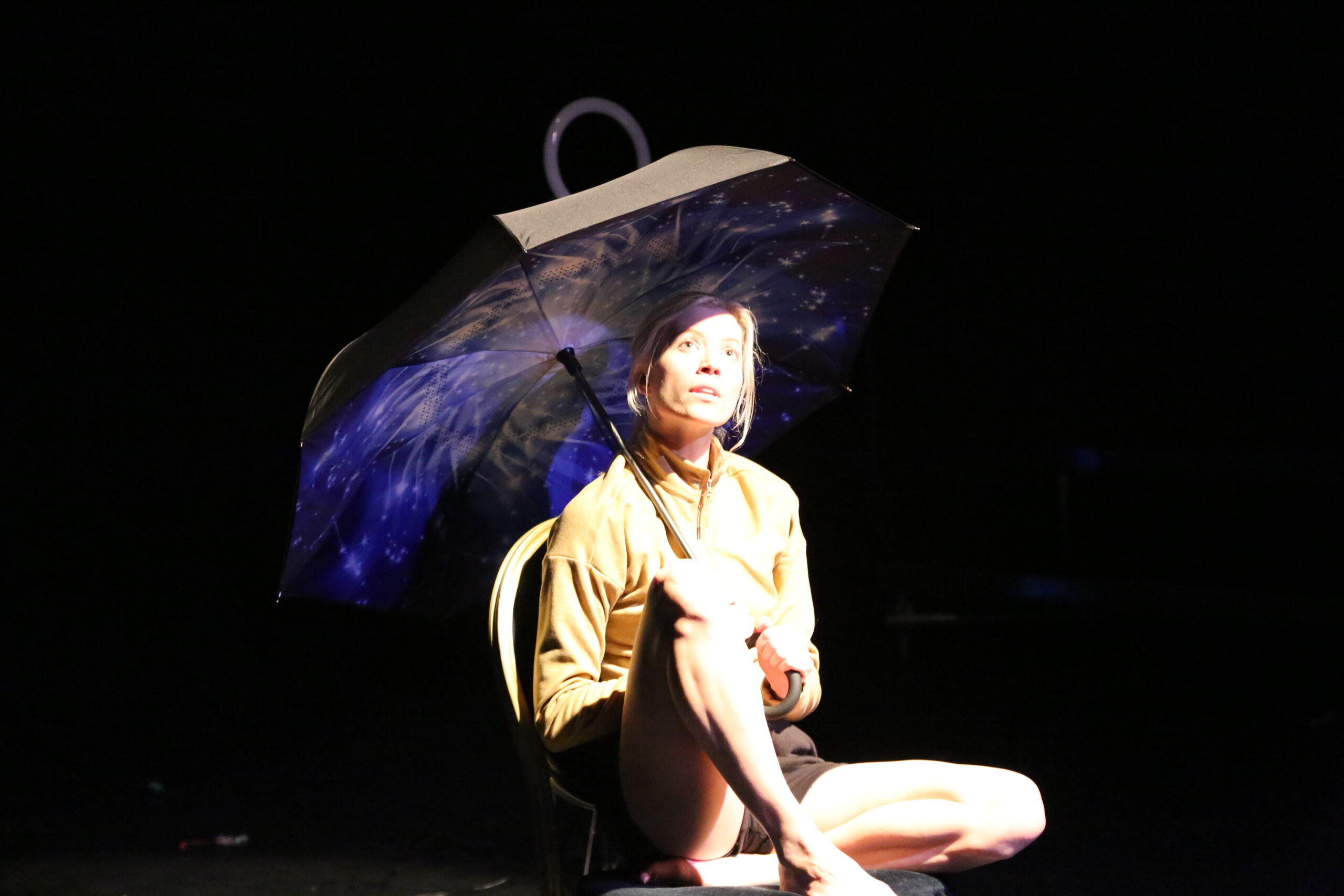
A yearly meeting
Innovation Lab
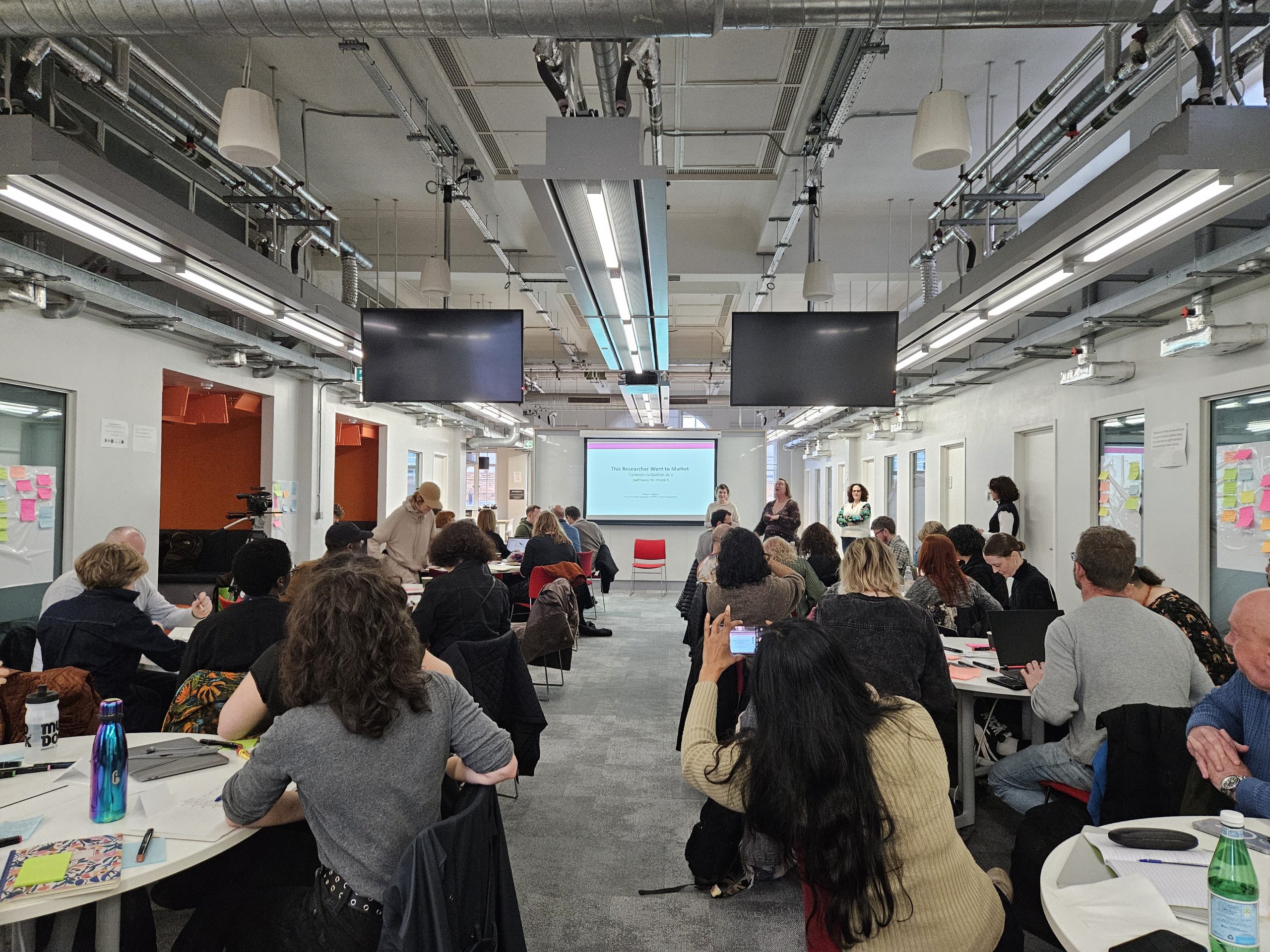
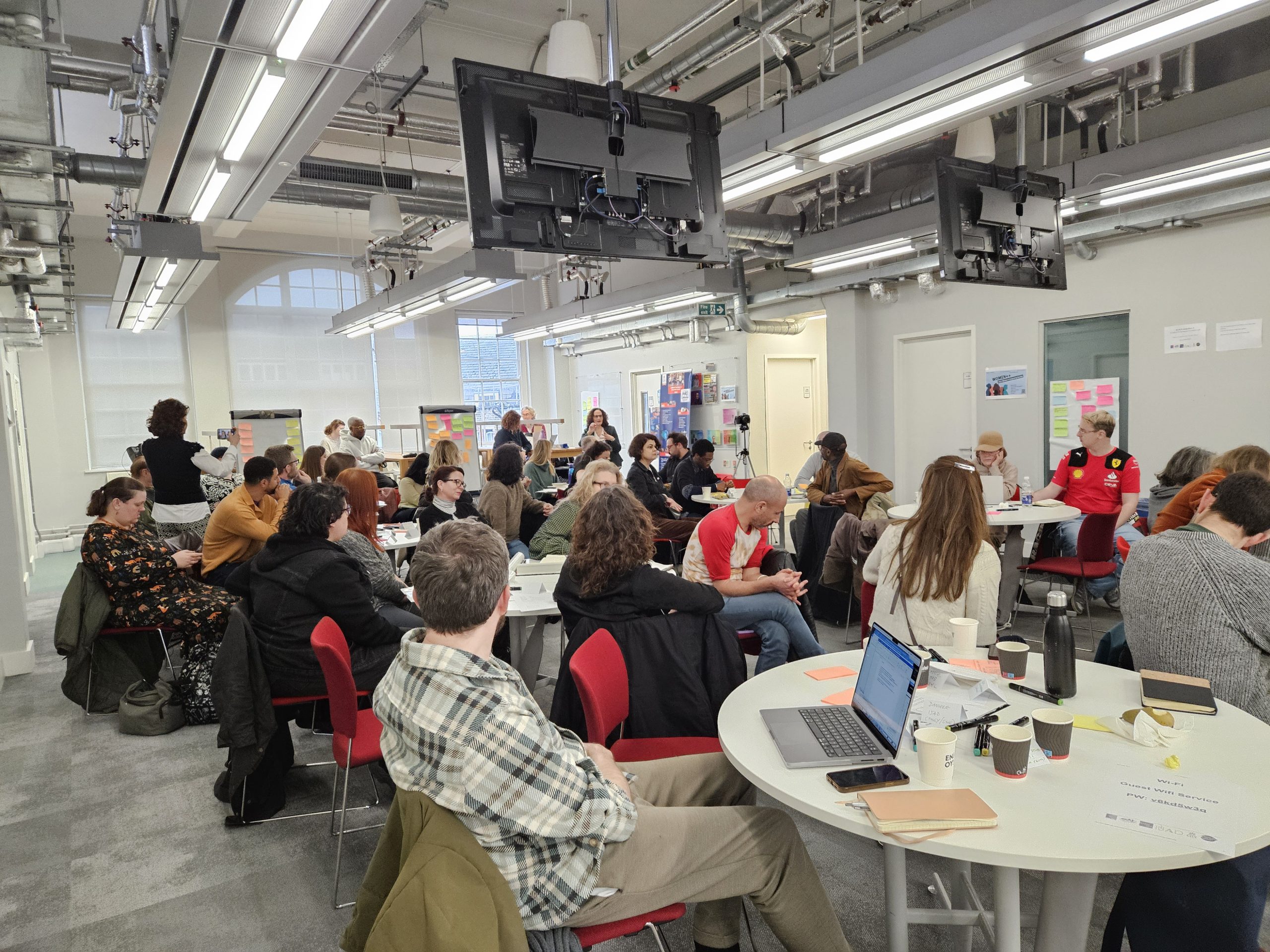
Innovation Lab unites artists, technologists and cultural leaders to shape the future of the dance/theatre hybrid sector. Together, they examine emerging changes, test assumptions, expose tensions and ask what the system needs in order to evolve. Moving between conversation and practice, they create space to ask, ‘what if?’ and imagine possibilities that may not yet exist within current ways of working.
Innovation Lab puts the questions to work and asks what else might be possible.
Recent session
Human AI: Artistic Intelligence
Innovation Lab Day 3, held at Riverside Studios, Hammersmith
A day of programme design, moderation frameworks and a Design Sprint bringing sector figures together around one question: who is at risk in this sector right now, and how do we build the infrastructure before those risks become embedded?
Four ways to take part
For artists
OOTFest & Residency, Innovation Lab sessions, and Connective Matrix
For students
Academic collaborations and doctoral placements, including with the Midlands4Cities Doctoral Training Partnership.
For professionals
Corporate and organisational workshops on movement, technology and hybrid practice. Online or in person.
For communities
Free and low-cost workshops with local and marginalised groups. The work that keeps our practice inclusive, not just innovative.